
All health begins in the gut – symptoms you'd never connect to digestion often start there
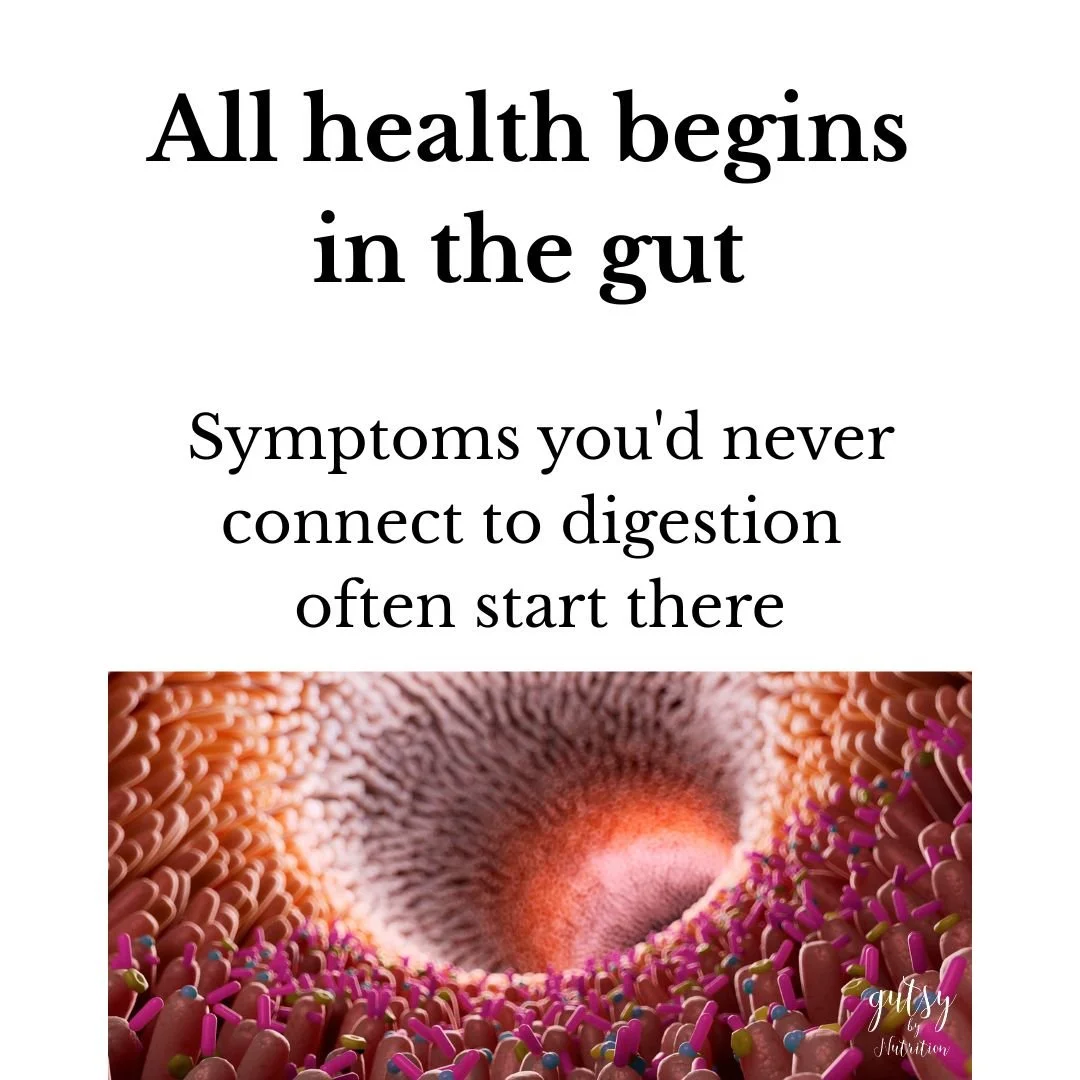
Hippocrates said it over 2,400 years ago — "all disease begins in the gut."
Most people hear that and think — but my problem isn't my gut. My problem is my thyroid. My hormones. My autoimmunity. My anxiety. My skin. My fatigue.
And that's exactly the point.
Because the gut doesn't just affect digestion. It affects everything. And when it's compromised — the effects ripple into every system in the body in ways that seem completely disconnected from anything digestive.
This is why so many women navigating complex, unresolved health issues — who have never considered the gut as the problem — find that addressing it becomes the turning point their health has been waiting for.
the symptoms that often trace back to the gut
The gut's influence is so broad that its dysfunction can show up almost anywhere.
fatigue that doesn't improve with rest
The gut is a major site of nutrient absorption and neurotransmitter production. When it's not functioning well, energy production suffers at a cellular level — regardless of how much sleep is happening.
anxiety, depression & brain fog
Approximately 90% of the body's serotonin is produced in the gut. The gut and brain communicate constantly via the vagus nerve. When the gut is inflamed or dysbiotic, mood, cognition, and emotional regulation are directly affected. Many women are treated for anxiety and depression without anyone looking at the gut.
hormonal imbalances
The gut microbiome directly influences oestrogen metabolism. When it's disrupted, oestrogen isn't cleared properly — contributing to oestrogen dominance, worsening PMS, endometriosis, PCOS, perimenopause symptoms, and thyroid conversion issues. Hormonal health and gut health are not separate conversations.
food reactions that keep expanding
When the gut lining becomes permeable (leaky gut), food particles that should stay in the digestive tract enter the bloodstream. The immune system responds — creating reactions to foods that were previously tolerated. The list of safe foods shrinks. This is frequently misidentified as "food intolerances" without the underlying cause being addressed.
autoimmunity
Approximately 70-80% of the immune system is housed in the gut. This is where the immune system learns to distinguish self from non-self. When the gut lining is compromised, this immune education breaks down — and autoimmune activity is one possible consequence. Many autoimmune conditions have significant gut components that go unaddressed.
skin conditions
Eczema, rosacea, acne, hives, and unexplained rashes frequently have gut drivers. The gut-skin axis is well established in research. Skin is often where the gut's inflammation shows up visibly.
weight that won't respond
Gut dysbiosis affects how calories are extracted from food, how fat is stored, how hunger hormones are regulated, and how thyroid hormone is converted. Weight resistance without gut investigation is often weight resistance without the full picture.
what commonly goes wrong
Gut dysfunction almost never comes in one form. The patterns that drive the widest range of symptoms tend to overlap:
leaky gut (intestinal permeability)
The gut lining becomes compromised, allowing inflammatory molecules into the bloodstream. Systemic inflammation follows — affecting the immune system, brain, hormones, and skin.
dysbiosis
The balance of gut bacteria shifts, with pathogenic or opportunistic organisms proliferating and beneficial ones declining. Dysbiosis disrupts everything from immune regulation to neurotransmitter production to oestrogen clearance.
SIBO
Bacteria that belong in the large intestine colonise the small intestine, fermenting foods and producing gases. Bloating, pain, and altered bowel function are the obvious symptoms — but SIBO also drives systemic inflammation, histamine issues, and nutrient malabsorption that affect the entire body.
low stomach acid
Often overlooked, low stomach acid allows pathogens to survive the digestive process that should eliminate them. It also impairs protein digestion — the undigested proteins feed dysbiosis further downstream.
poor motility
When transit is too slow, toxins are reabsorbed rather than excreted. When too fast, nutrients can't be properly absorbed. Both extremes contribute to the overall burden.
what gut healing actually requires
There is no single gut protocol that works for everyone — this is important to understand. What heals one person can worsen another, particularly where histamine intolerance, SIBO, or oxalate issues are present. Individual assessment matters.
But the foundational layers are consistent:
remove what's disrupting
Not just inflammatory foods, but gut pathogens, environmental toxins, and mould. Removal without rebuilding rarely leads to lasting change — but it's the necessary first step.
rebuild the microbiome
Through fibre diversity and targeted probiotic support. Probiotic strain choice matters considerably — generic probiotics often miss the mark or worsen specific conditions.
repair the gut lining
Specific nutrients restore tight junction integrity and mucosal health. This step is consistently skipped in favour of probiotics — but without repairing the physical barrier, inflammation continues.
restore digestive function
Stomach acid, bile flow, and digestive enzymes so food is properly broken down rather than fermenting and feeding dysbiosis.
rebalance the nervous system
The gut-brain axis runs in both directions. Chronic stress and nervous system dysregulation perpetuate gut dysfunction. This piece is not optional — it's part of the biology.
the bigger picture
Gut dysfunction doesn't always look like a gut problem.
For women navigating thyroid dysfunction, autoimmunity, hormonal imbalances, mood disorders, skin conditions, histamine reactions, chronic fatigue, or food sensitivities — the gut is almost always worth investigating, even when digestive symptoms aren't the primary complaint.
Because very often, it's where the thread begins.
Nore Hoogstad is a Functional Nutritionist & Psych-K Practitioner specialising in complex, unresolved health cases. A free 20-minute call is available — come and tell the story. Book here.