
Why my body finally changed — thyroid, gut, fasting & the blocks nobody talks about
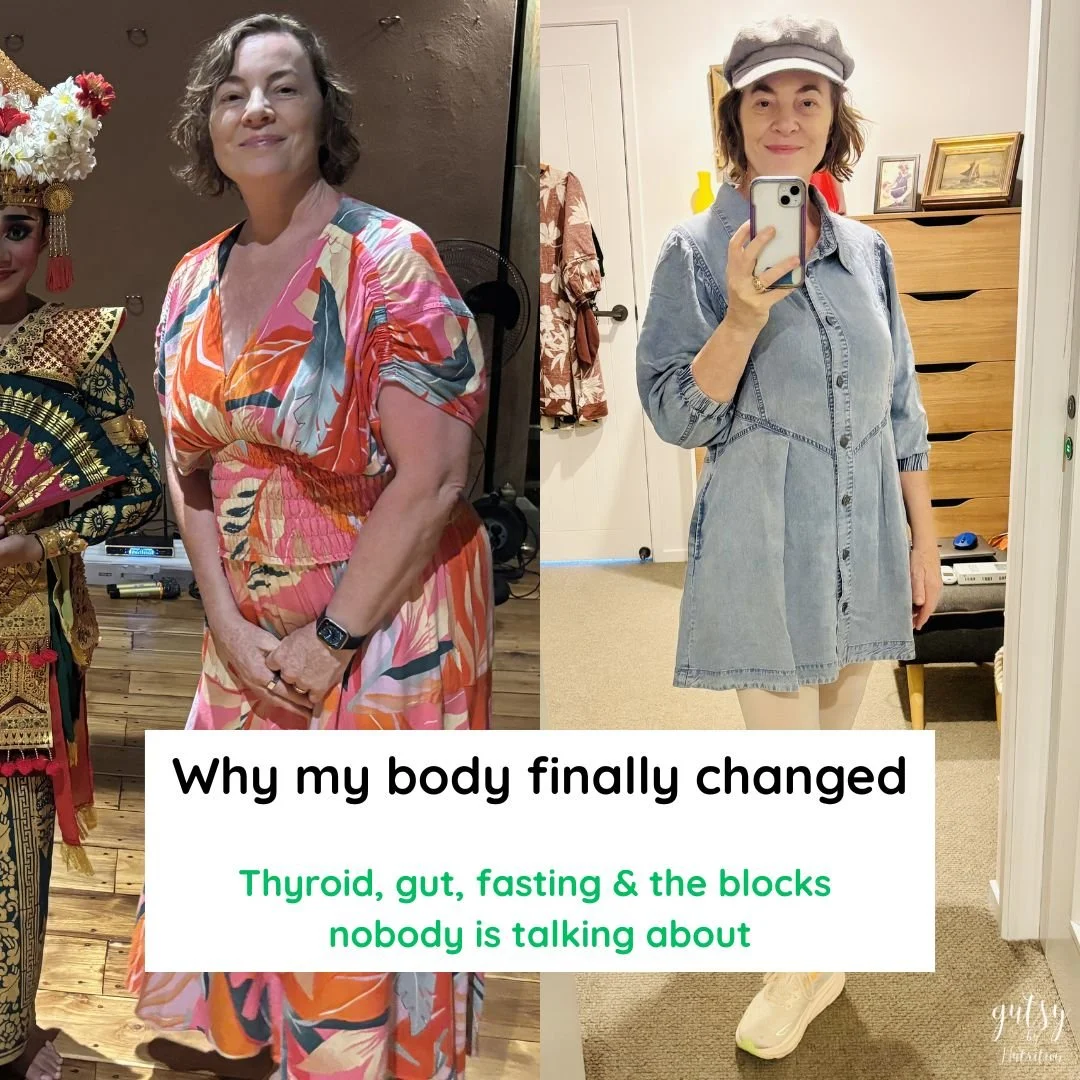
For years my weight didn't make sense. In the images, I’m the most I’ve everyweighed after a mould exposure and pneumonia.I had to focus on healing.
So I ate well. I was active. I understood nutrition — professionally and personally. And yet my body held on, fluctuated, frustrated me, and refused to respond the way it should have.
Over time, I'd lose weight, regain it, lose it again. I’d get off sugar, and then a little too much would sneak back in again. The classic pattern that most people quietly blame on willpower or consistency — even when they know, rationally, that neither is actually the problem.
It took addressing five separate layers — simultaneously — to finally shift something that had been stuck for a long time. And the result was 11 kilograms gone in three months, moving into a healthy BMI for the first time in years.
This is what actually changed.
layer 1 — the thyroid piece
Thyroid dysfunction is one of the most commonly missed drivers of weight resistance in women.
Not because it isn't being tested — but because it's often being tested incompletely. A TSH within the normal range is routinely interpreted as a healthy thyroid. But TSH is a pituitary hormone, not a thyroid hormone. It tells you what the brain is asking for — not what the thyroid is actually producing or converting.
A complete thyroid picture includes free T3, free T4, reverse T3, and thyroid antibodies. When these are looked at together, patterns emerge that a TSH alone completely misses — including poor T4 to T3 conversion, elevated reverse T3 (which blocks active thyroid hormone), and autoimmune thyroid activity that standard testing doesn't capture.
In my case, the full picture revealed what the partial picture had consistently missed. Addressing thyroid function properly — through targeted nutritional support, removing the inflammatory drivers suppressing conversion, and supporting the gut-thyroid axis — was the foundation everything else built on.
Because without adequate thyroid function, metabolism simply cannot respond normally. No dietary approach compensates for that.
layer 2 — the gut
The gut and thyroid are more connected than most people realise.
Approximately 20% of thyroid hormone conversion from the inactive T4 form to the active T3 form happens in the gut — specifically dependent on a healthy microbiome. When the gut is dysbiotic or the lining is compromised, this conversion is impaired. Which means even when thyroid support is in place, the gut can be quietly undermining it.
Beyond conversion, gut dysfunction drives systemic inflammation — which suppresses thyroid function further, increases cortisol, disrupts leptin and insulin signalling, and keeps the body in a physiological state that actively resists weight change.
Healing the gut — addressing intestinal permeability, rebalancing the microbiome, restoring digestive function — wasn't a separate project from addressing the thyroid. It was the same project.
layer 3 — eating style and fasting
Once the thyroid and gut foundations were in place, the approach to eating could actually work.
This is the part most weight loss advice gets completely backwards — the dietary strategy is applied first, without addressing the metabolic and hormonal environment it's landing in. Which is why so many people follow the advice correctly and still don't get the expected results.
For me, a combination of anti-inflammatory whole food eating, strategic reduction of foods driving my specific inflammatory pattern, and intermittent fasting — applied at the right time and paced appropriately — finally produced the response that years of similar efforts hadn't.
The fasting piece in particular was significant. Not as a calorie restriction tool — but as a way of giving the gut and liver regular periods of rest and repair, improving insulin sensitivity, and supporting the cellular housekeeping processes (autophagy) that had been chronically suppressed.
The body responded — because for the first time, the conditions were right for it to do so.
layer 3b — blood sugar
This is the piece that made fasting sustainable — and that most fasting advice completely overlooks.
Blood sugar dysregulation is one of the most underappreciated drivers of weight resistance, particularly in women with hormonal imbalances, thyroid dysfunction, or chronic stress histories.
When blood sugar is unstable, the body is caught in a cycle that actively works against fat burning. Cortisol rises with each blood sugar crash — and cortisol promotes fat storage, particularly around the abdomen. Insulin spikes after each blood sugar high — and elevated insulin blocks fat burning entirely. The hunger and cravings that result make sustained dietary change feel genuinely impossible, not just difficult.
Beyond the direct metabolic effects, unstable blood sugar disrupts sleep — which further impairs the hunger hormones leptin and ghrelin, making appetite regulation harder the following day. It increases inflammation, suppresses thyroid conversion, and keeps the body in a stress physiology that perpetuates every other layer.
Stabilising blood sugar — through the timing and composition of meals, managing stress, supporting the adrenal response, and using fasting appropriately — wasn't a separate project from the fasting work. It was what made fasting sustainable in the first place.
layer 4 — the unconscious piece
This is the layer that makes people uncomfortable — and the one I believe made the difference between another temporary change and a lasting one.
Yoyo dieting is not a discipline problem. For most people who experience it, there are deeply held subconscious patterns underneath — beliefs about safety, identity, self-worth, and what being a different size or shape actually means — that the conscious mind has no access to through willpower alone.
I had done the physical work many times before. Partially successfully, temporarily. What was different this time was addressing the subconscious layer through Psych-K — shifting beliefs that had been quietly driving the pattern for decades.
Beliefs like — it isn't safe to be well. It's safer to stay invisible. This is just how my body is. I always regain it. I personally had to work through some unconscious safety fears about weighing less, loving my body again, and believing my weight could stay off.
These aren't irrational thoughts — they're protective patterns formed at a time when they made sense. But they create a physiological environment that resists the very changes the conscious mind is working toward.
Shifting them didn't replace the physical work. It allowed the physical work to actually land.
what this means for others
I'm sharing this not as a weight loss story — but as a story about what happens when the real drivers are finally addressed.
For women navigating thyroid dysfunction, gut issues, hormonal imbalances, and the frustration of bodies that don't respond the way they should — the answer is almost never more restriction or more effort. It's almost always a deeper look at what's actually driving the pattern.
The body is not letting us down. It's responding logically to conditions that haven't yet been fully understood or addressed.
That's what changes when they are.
Nore Hoogstad is a Functional Nutritionist & Psych-K Practitioner specialising in complex, unresolved health cases. A free 20-minute call is available to share your story and explore what might be driving your symptoms. Book here.