
7 popular supplements that could trigger reactions in people with autoimmunity or complex chronic illness
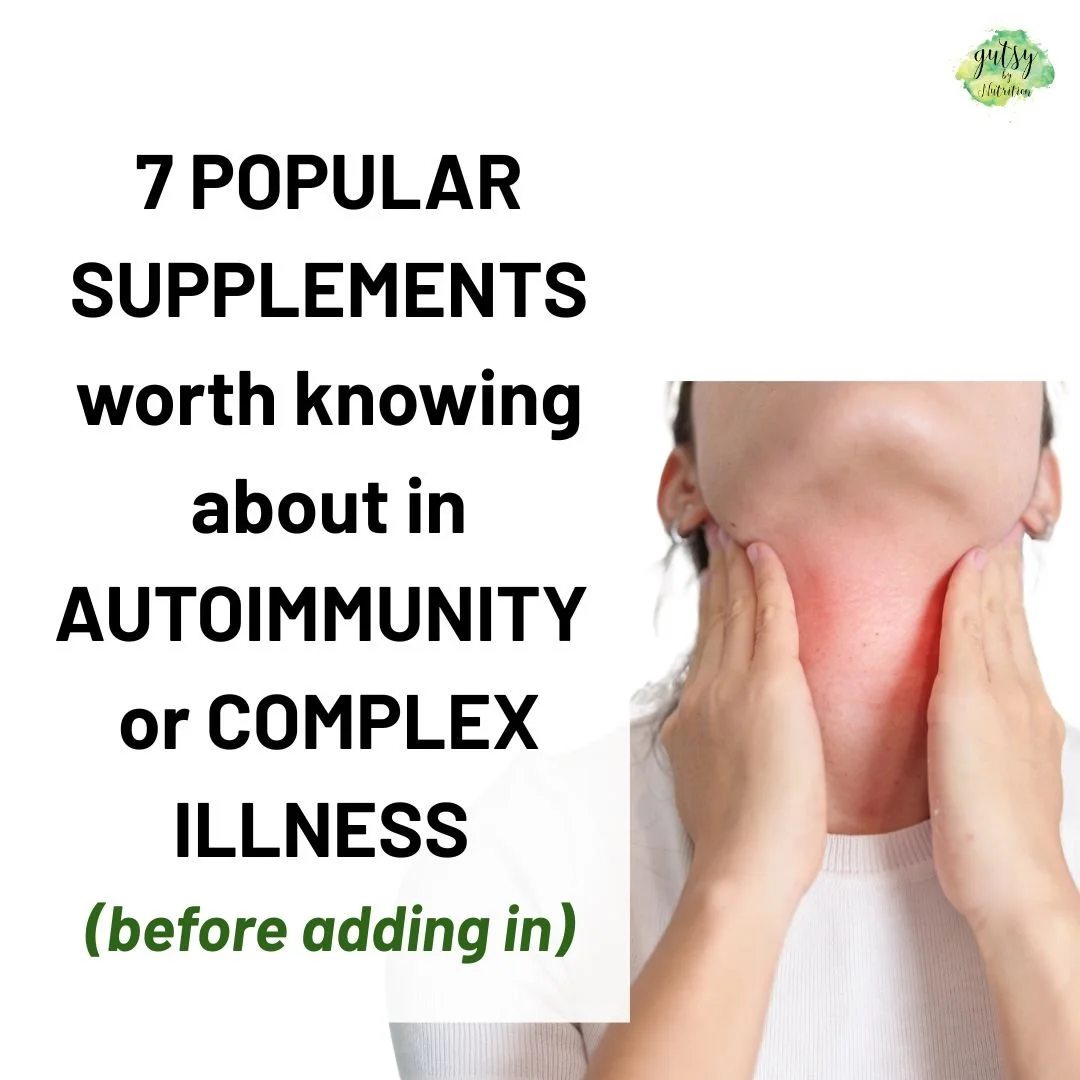
These supplements are widely marketed — many with genuine evidence behind them for certain people and conditions.
But for women navigating autoimmunity, mast cell activation, histamine intolerance, or complex multi-system illness, some warrant a closer look before starting.
This isn't a list of supplements to avoid categorically. It's a list of supplements worth discussing with a knowledgeable practitioner before adding — particularly if you have a history of immune reactivity, flares, or unexpected reactions to things that are supposed to help.
NR & NMN (NAD precursors)
Nicotinamide riboside (NR) and nicotinamide mononucleotide (NMN) are among the most hyped longevity supplements of the last few years — marketed for cellular energy, anti-ageing, and mitochondrial support.
The research on NAD precursors is genuinely interesting. But in people with autoimmunity or immune dysregulation, there is a clinically observed pattern of immune activation with these compounds — including flares of existing autoimmune conditions, increased inflammatory symptoms, and worsening reactivity.
The mechanism is thought to involve NAD's role in immune cell activation and inflammatory signalling pathways — which in a dysregulated immune system can amplify rather than support.
Worth noting — this doesn't mean NAD support isn't valuable in complex illness. It means the form, dose, and timing matter — and that starting without understanding the immune context can produce unexpected results.
Resveratrol
Resveratrol is marketed as an anti-ageing, anti-inflammatory compound — and it does have anti-inflammatory properties in some contexts. The problem in autoimmunity is that resveratrol also activates certain immune pathways in ways that can be stimulating rather than calming for an already dysregulated immune system.
Additionally, resveratrol is a significant histamine liberator — meaning it can trigger histamine release even in people who aren't reacting to dietary histamine directly. For anyone navigating histamine intolerance or mast cell activation alongside autoimmunity, this is worth knowing.
High dose vitamin D (without cofactors)
Vitamin D deficiency is extremely common in autoimmune conditions and addressing it is genuinely important. The issue arises with high-dose supplementation without the cofactors needed for proper vitamin D metabolism — particularly vitamin K2, magnesium, and adequate vitamin A.
Without K2, high-dose D3 can drive calcium into soft tissues rather than bone. Without magnesium, vitamin D cannot be properly activated — and supplementing without it can actually worsen magnesium deficiency, which has its own inflammatory consequences.
High-dose vitamin D can also, in some people, paradoxically worsen autoimmune activity — particularly in conditions involving the vitamin D receptor pathway. Testing and monitoring rather than assuming more is better is the appropriate approach.
Collagen peptides
Collagen supplements are marketed extensively for skin, joints, and gut healing — and for many people they're well tolerated and genuinely beneficial. But collagen is a high-histamine product, and for people with histamine intolerance, mast cell activation, or oxalate sensitivity, it can trigger significant reactions.
Collagen peptides are also high in hydroxyproline — an amino acid that can increase oxalate load in susceptible individuals. For anyone navigating oxalate issues alongside autoimmunity or complex illness, this connection is frequently missed.
Lion's Mane mushroom
Lion's Mane has significant evidence for neurological support and is widely marketed for brain fog, cognitive function, and nerve regeneration. For many people it's well tolerated and beneficial.
However Lion's Mane — along with most medicinal mushrooms — is immune modulating. In autoimmune conditions, immune modulation doesn't always mean immune calming. For some people, particularly those with mast cell activation or existing immune dysregulation, medicinal mushrooms can trigger flares, increased reactivity, or worsening symptoms.
The assumption that "immune support" universally means "immune calming" is worth questioning in this population.
Quercetin
Quercetin is popular in functional health circles — particularly for histamine intolerance and mast cell support, where it does have genuine evidence as a natural mast cell stabiliser. For many people with histamine issues it's genuinely helpful.
The nuance is that quercetin is also immune modulating — and at higher doses or in certain immune contexts, it can have stimulating rather than stabilising effects. It also interacts with several medications and can affect thyroid hormone metabolism at higher doses.
Additionally, quercetin is a significant oxalate — one of the highest oxalate supplements available. For anyone already managing oxalate issues, adding quercetin can substantially increase oxalate burden in ways that aren't always immediately obvious.
Medicinal mushrooms (IN GENERAL) EG Reishi, Chaga, Turkey Tail, CordycepS
Beyond Lion's Mane, the broader category of medicinal mushrooms deserves mention. These are extensively marketed for immune support, energy, longevity, and anti-cancer properties — and the research behind many of them is genuinely compelling for certain applications.
The consistent pattern across medicinal mushrooms is significant immune modulation. For people with healthy, well-regulated immune systems this is generally beneficial. For people with autoimmunity, mast cell activation, or complex immune dysregulation, the immune stimulation can tip the balance in the wrong direction.
Reishi in particular — often marketed as calming and anti-inflammatory — can paradoxically worsen some autoimmune patterns.
Chaga contains very high levels of oxalates, making it problematic for anyone with oxalate sensitivity.
Turkey Tail is one of the better tolerated but still warrants caution in active autoimmune flare.
the bigger picture
None of these supplements are universally problematic. Many people with complex illness take some of them without issue — and some find genuine benefit.
The point is that in autoimmunity and complex chronic illness, the immune system is already dysregulated. Adding compounds that modulate, stimulate, or activate immune pathways without understanding the individual's specific immune pattern can produce unexpected results — including flares that are frustrating precisely because the supplement was supposed to help.
Starting low, going slow, and understanding the immune context before adding anything — particularly in the trendy supplement category — is always the more considered approach.
Nore Hoogstad is a Functional Nutritionist & Psych-K Practitioner specialising in complex, unresolved health cases. A free 20-minute call is available to share your story and explore what might be driving your symptoms. Book here.