
Has being unwell become your identity?
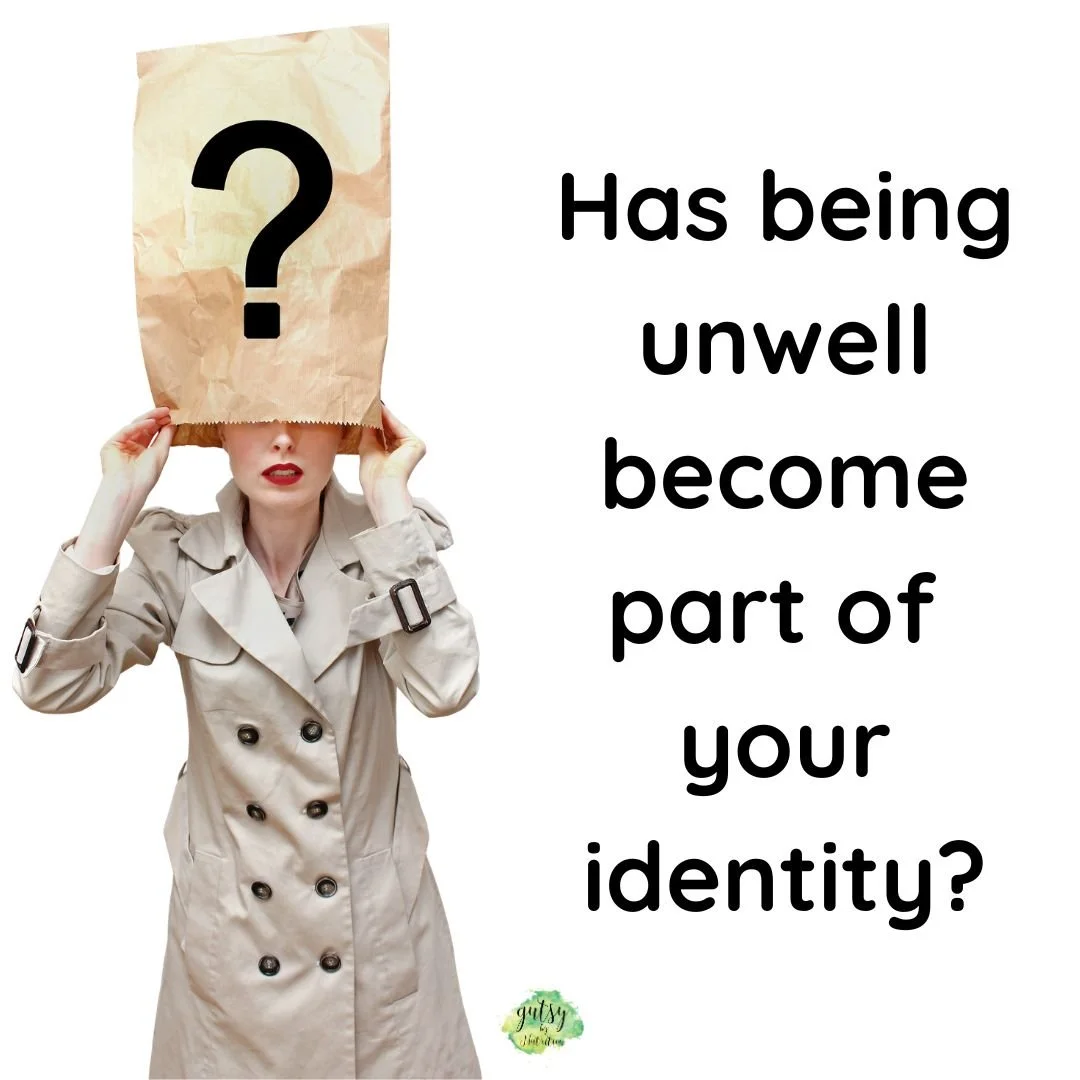
This is a question worth sitting with — not as a judgement, but as an honest inquiry.
When someone has been unwell for a long time — years, sometimes decades — something subtle can happen. The illness stops being something happening to them and starts becoming part of who they are. The symptoms become the story. The limitations become the identity.
And when that happens, healing becomes much harder — not because the person doesn't want to get well, but because some part of them doesn't know who they'd be without the illness.
how identity forms around illness
It starts innocently enough. When someone is sick for long enough, their life reorganises around it. Relationships shift. Work changes. Plans are cancelled. The illness becomes the lens through which everything is filtered — what's possible, what's safe, what's expected.
Over time, the people around them relate to them through the illness too. They become "the one who's always unwell," "the sensitive one," "the one who can't eat anything." These labels, however well-meaning, reinforce a fixed story about who this person is.
And internally, the beliefs follow. Thoughts like
"My body has always let me down"
"I've tried everything — nothing works for me"
"I'll never be fully well"
"This is just how I am"
These aren't character flaws. They're the natural result of a nervous system that has been in a prolonged stress response, trying to make sense of an overwhelming experience by creating a coherent narrative.
The problem is — that narrative can become a ceiling.
how beliefs affect healing physically
This isn't abstract. There is significant research on the way beliefs and expectations shape physiological outcomes — from placebo studies showing measurable physical change driven by expectation, to research on how chronic stress and perceived helplessness alter immune function, inflammation levels, and the body's ability to repair itself.
The nervous system doesn't distinguish neatly between a physical threat and a perceived one. A deeply held belief that healing isn't possible creates a chronic low-grade threat response — keeping the body in a state that prioritises survival over repair.
In complex chronic illness specifically, this matters enormously. Many people have been through so many failed treatments, dismissive practitioners, and dashed hopes that a layer of protective disbelief has formed. It makes sense — it's self-protective. But it also keeps the door to healing partially closed.
the identity question
There's a gentler version of this worth exploring too.
Sometimes people hold onto illness not because they want to be unwell — of course they don't — but because the illness has given them something they needed. Permission to rest. Legitimate reasons to say no. Compassion from others. A sense of community with others who understand. These can be calld secondary gains.
None of these are wrong needs. They're deeply human. But when illness becomes the only way those needs feel legitimate, it creates an unconscious resistance to getting well — because wellness feels like losing the things that came with being sick.
Again — not a judgement. An observation worth sitting with.
where Psych-K comes in
Psych-K is a process that works directly with subconscious beliefs — the ones that sit below conscious awareness and quietly shape how the body responds to healing.
Unlike talk therapy, which works primarily at the conscious level, Psych-K uses specific protocols to access and rewrite beliefs at the subconscious level. This matters because research suggests the subconscious mind drives the vast majority of our automatic responses — including physiological ones.
In the context of chronic illness, this might look like:
Shifting a deep belief that "my body is broken" to "my body is doing its best and capable of healing"
Releasing the identity of being "the sick person" without losing the compassion and self-awareness that came with that experience
Addressing the subconscious patterns that keep the nervous system in a threat state even when the physical drivers have been addressed
Psych-K doesn't replace the physical work. It works alongside it — addressing the layer that often explains why some people resolve completely and others plateau, despite doing all the same things.
this isn't about blame
It's important to name this clearly — none of this is the person's fault.
Chronic illness is real. The physical drivers are real. The suffering is real. The fact that beliefs and identity can become part of the picture doesn't mean the illness is "in someone's head" or that they caused it through negative thinking.
What it means is that healing is multi-layered. And for people who have done significant physical work and still haven't fully resolved, the identity and belief layer is often where the remaining pieces lie.
a question worth asking
Not "am I making this up?" — because the answer is no.
But perhaps — "who would I be if I were well? What would my life look like? And is any part of me afraid of that?"
The answers can be surprisingly revealing.
Nore Hoogstad is a Functional Nutritionist & Psych-K Practitioner specialising in complex, unresolved health cases. If this resonates and you'd like to explore the mind-body layer of your healing, a free Chronic Symptom Review is available here.