
Why the copper-zinc ratio matters more than you might think
Many people think of minerals as something only relevant to bones or general nutrition.
But minerals are actually deeply involved in
brain chemistry
stress tolerance
hormone balance
inflammation
energy production
immune function
nervous system regulation
And one of the most important – yet overlooked – relationships in the body is the balance between copper and zinc. It’s key for mood, anxiety, overwhelm, hormones, and nervous system resilience.
The copper-zinc ratio is not just about whether levels are ‘normal.’
But whether they are balanced relative to each other.
Because in functional health, ratios often tell us far more than isolated numbers.
Copper Isn’t ‘Bad’ – But Imbalance Can Be Problematic
Copper is an essential mineral.
We need it for
energy production
iron metabolism
collagen formation
neurotransmitter production
immune health
antioxidant protection
But modern life can create situations where copper becomes disproportionately elevated relative to zinc.
And this is where symptoms can start appearing.
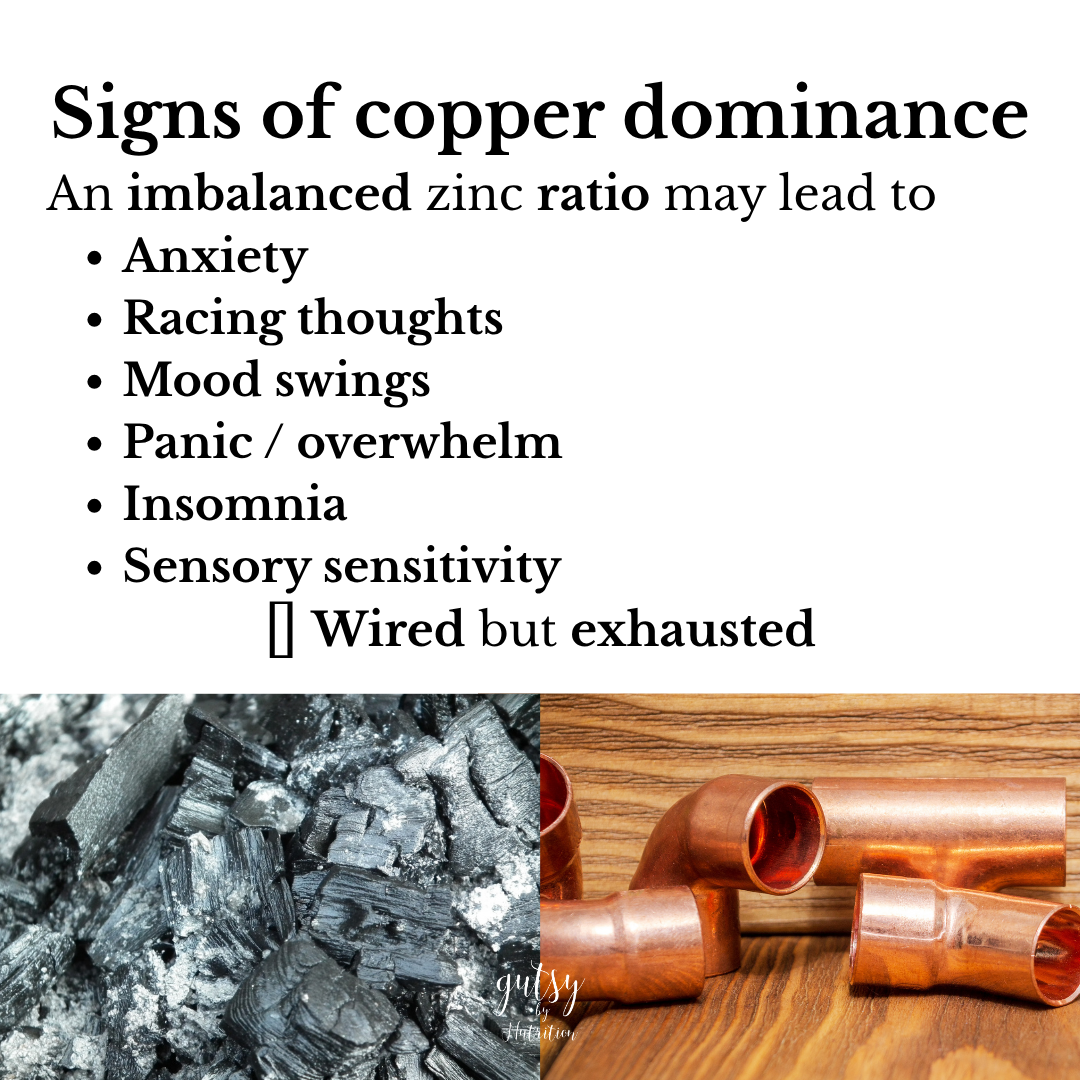
A high copper-to-zinc ratio is often associated with
anxiety
emotional overwhelm
nervous system hypersensitivity
racing thoughts
poor stress tolerance
insomnia
mood instability
histamine issues
hormonal symptoms
increased inflammation
Many women with high stress loads, chronic inflammation, burnout histories, gut dysfunction, or hormonal dysregulation may unknowingly be dealing with mineral imbalance underneath the surface.
Zinc – The Nervous System ‘Buffer’ Mineral
Zinc plays a critical role in
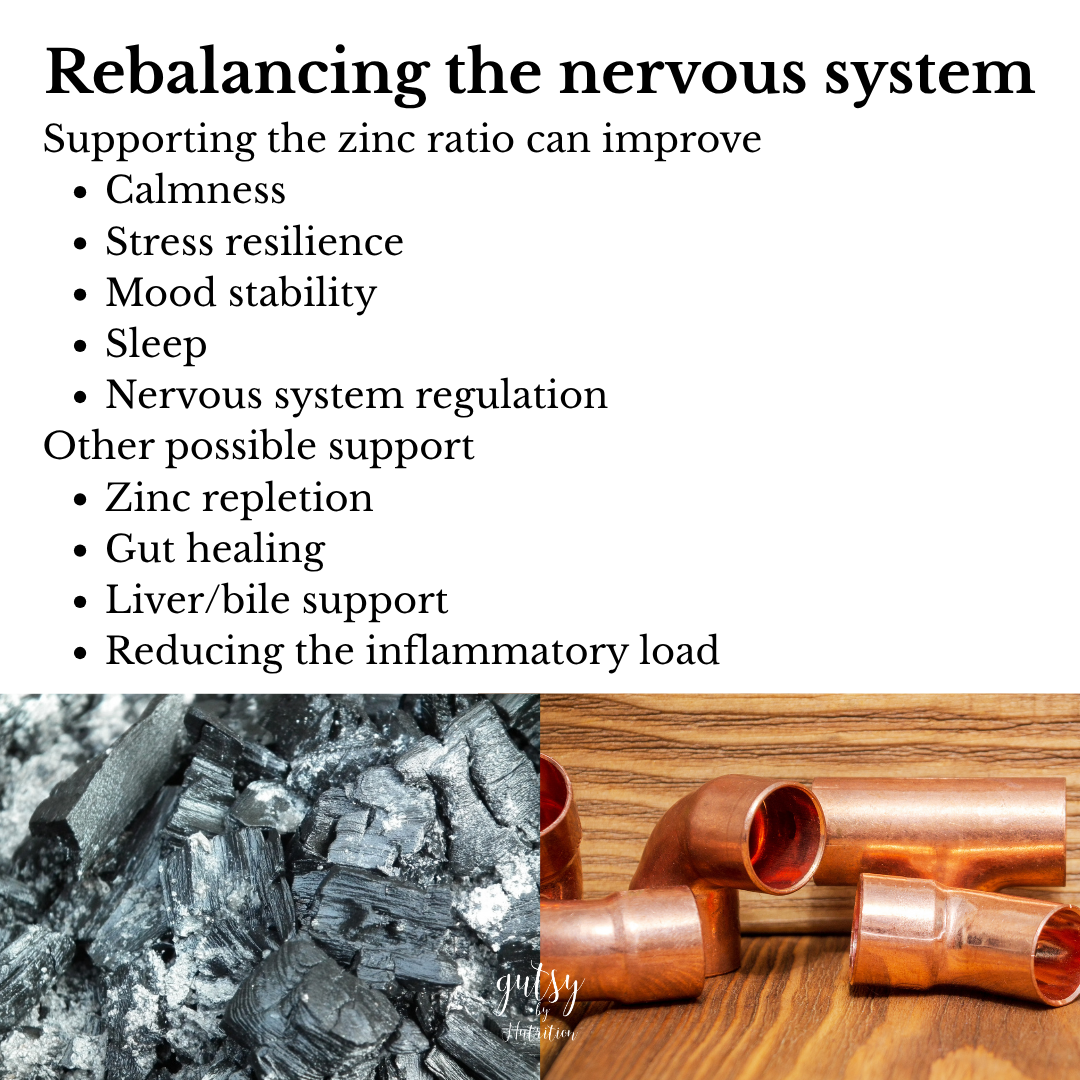
calming the nervous system
immune regulation
gut lining repair
neurotransmitter balance
hormone production
detoxification
inflammatory control
It acts almost like a stabilising mineral in the body.
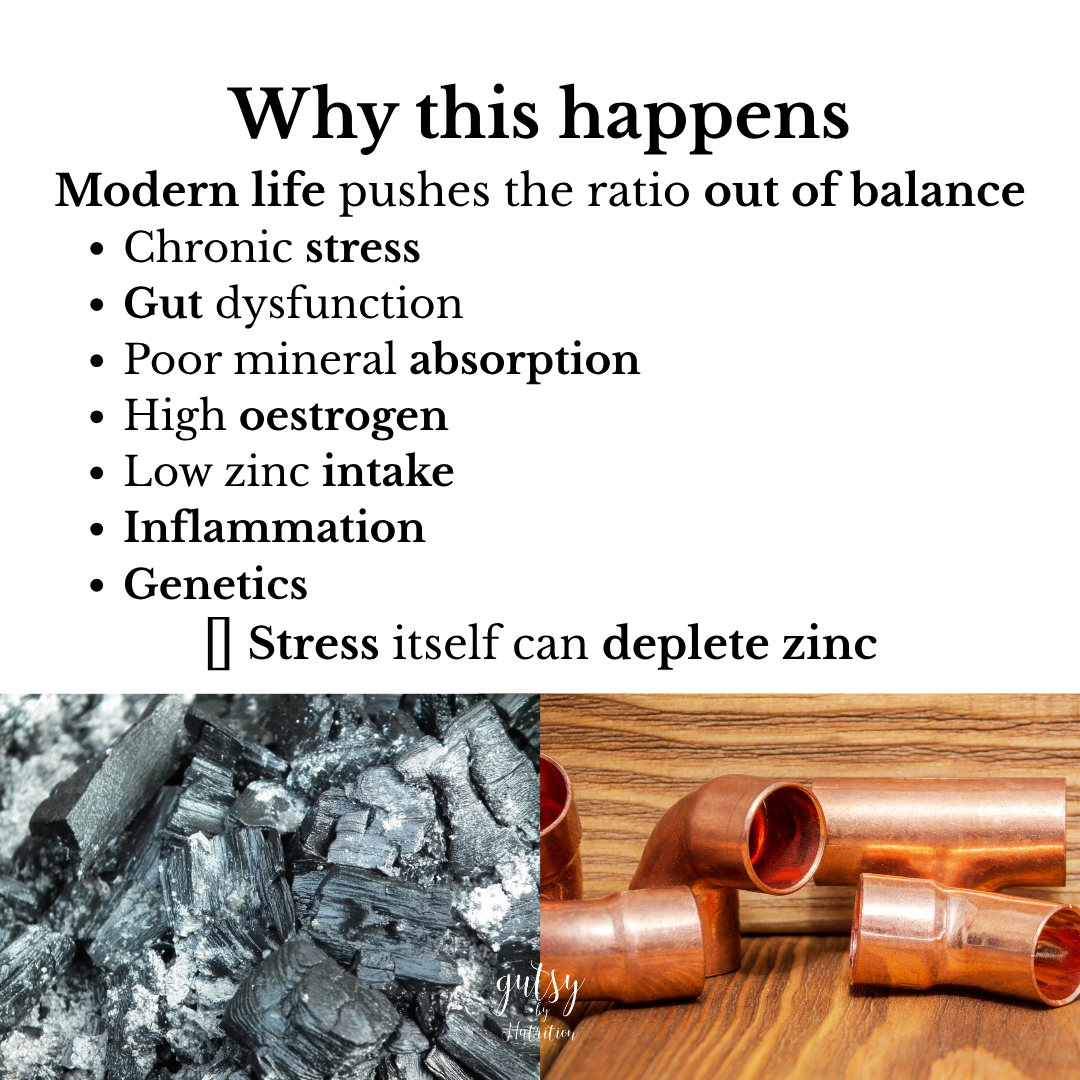
But stress rapidly depletes zinc.
So over years of
pushing through
caregiving
chronic stress
overtraining
inflammation
gut issues
poor digestion
restrictive dieting
chronic infections
…the body can gradually lose mineral resilience.
This is one reason some people eventually reach a point where
they become reactive to foods
tolerate stress poorly
feel ‘wired but exhausted’
develop strange inflammatory symptoms
feel emotionally fragile despite being “the strong one” for years
The body loses buffering capacity.
The Modern World Is Not Helping
Copper imbalance may be influenced by multiple modern factors, including
chronic stress physiology
hormonal contraceptives
reduced mineral density in foods
gut dysfunction
impaired bile flow
inflammation
environmental exposures
poor protein intake
low stomach acid
chronic infections
ultra-processed diets
At the same time, many people are not consuming or absorbing enough zinc.
So as mentioned, the issue is often not simply ‘high copper.’ It is the relationship between copper and zinc.
Why Standard Blood Tests Often Miss The Bigger Picture
This is where many people become frustrated.
Because they are told, “Everything looks normal.”
Yet they still feel
anxious
exhausted
inflamed
hormonally dysregulated
emotionally overwhelmed
reactive to everything
Standard blood testing does not always reveal
tissue-level mineral patterns
long-term stress adaptation
nervous system depletion
mineral ratios
metabolic compensation patterns
And this is why functional testing can sometimes provide a much deeper lens.
HTMA – Looking At Mineral Patterns Differently
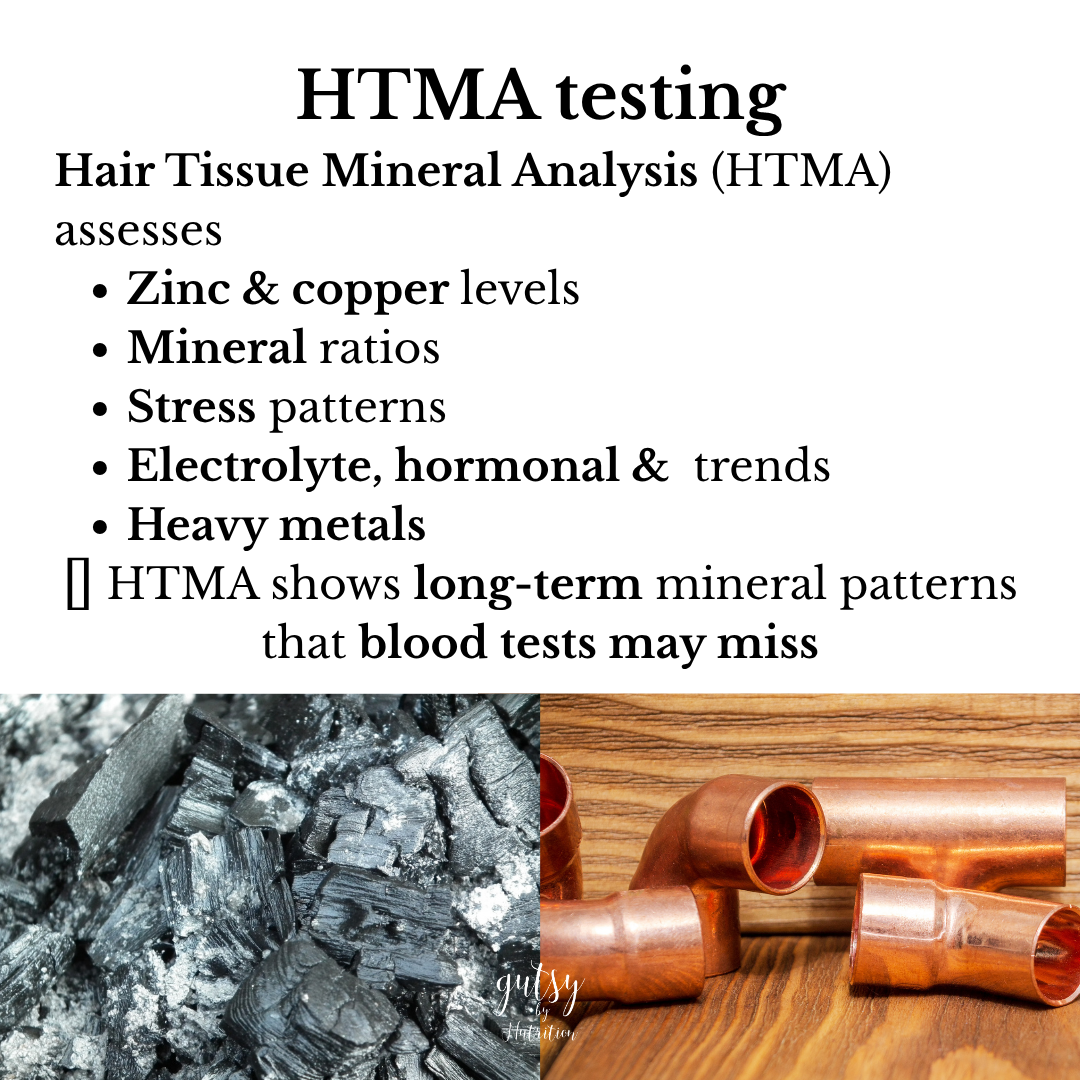
One tool often used in functional and integrative health is HTMA (Hair Tissue Mineral Analysis).
HTMA does not diagnose disease.
Instead, it looks at
mineral patterns
mineral ratios
stress patterns
metabolic trends
electrolyte balance
nervous system tendencies
Including the copper-zinc ratio.
This can sometimes help explain why someone feels chronically dysregulated even when conventional testing appears ‘fine.’
Because the body is a systems-based network.
And minerals help regulate nearly every system in it.
The Goal Is Understanding
Mineral imbalances are rarely about one ‘bad’ nutrient.
The body is adaptive. Complex. Interconnected.
The goal is not becoming fearful of copper. Nor blindly supplementing zinc without understanding the bigger picture.
The goal is understanding
what the body has been exposed to
how stress has shaped physiology over time
what systems may be compensating
where resilience may have been lost
Because symptoms are not random.
They are often patterns.
And sometimes the deeper story starts with something as seemingly simple as minerals.
Free Chronic Symptom Review available here