
Our food isn't what we think it is anymore
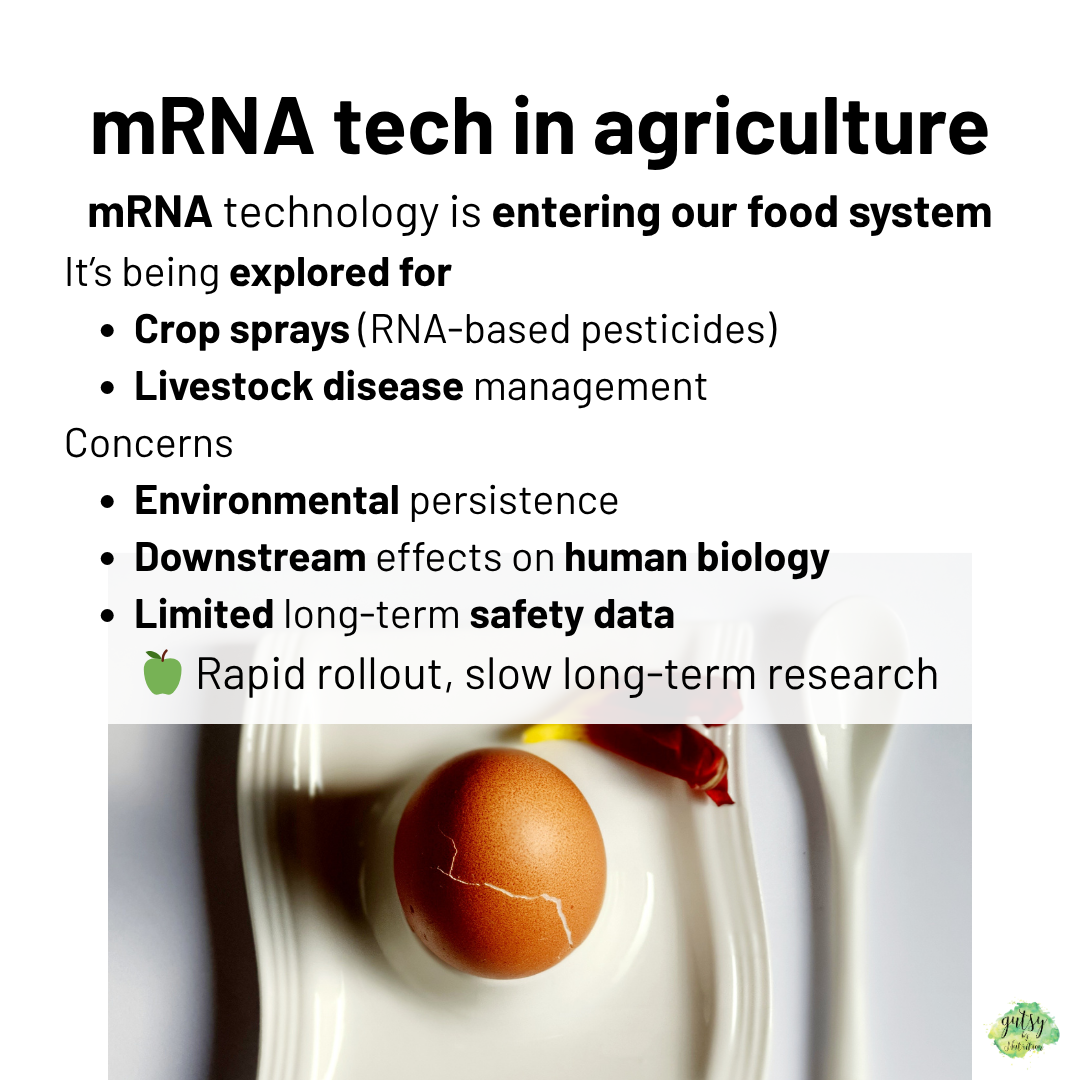
Food today is not the same food our grandparents grew up eating. Even over the past few decades, the way food is grown, processed, transported, modified, and marketed has changed dramatically — and many people are beginning to notice the effects in their own bodies.
What’s particularly challenging is that much of this change has happened quietly. Foods still look like food. Packaging still says “healthy,” “natural,” or “wholefood.” Yet behind the scenes, many foods have been altered in ways most people rarely think about.
This is not about fear or paranoia. It is about awareness.
Because the question is no longer simply
“Is this healthy?”
It is increasingly
“What has this food been exposed to — and how might that affect the body?”
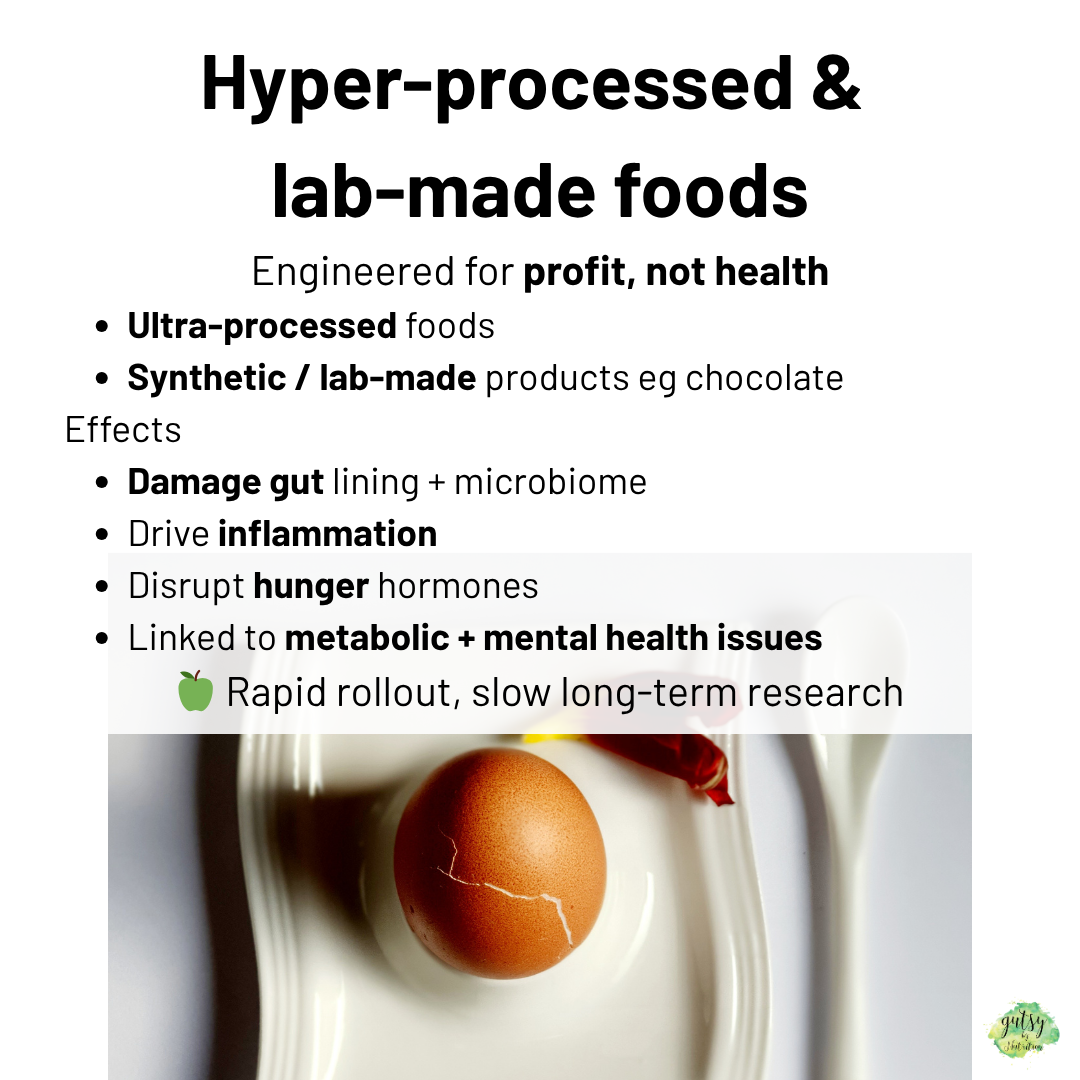
The Rise of “Food-Like Substances”
Modern supermarkets are filled with products that resemble food but are often highly engineered. Ultra-processed foods are now a major part of many diets, even among health-conscious people.
These foods may contain
artificial flavour enhancers
preservatives
stabilisers
emulsifiers
seed oils
synthetic additives
genetically modified ingredients
chemical residues
Many are designed to be hyper-palatable, shelf-stable, and addictive to the brain’s reward systems.
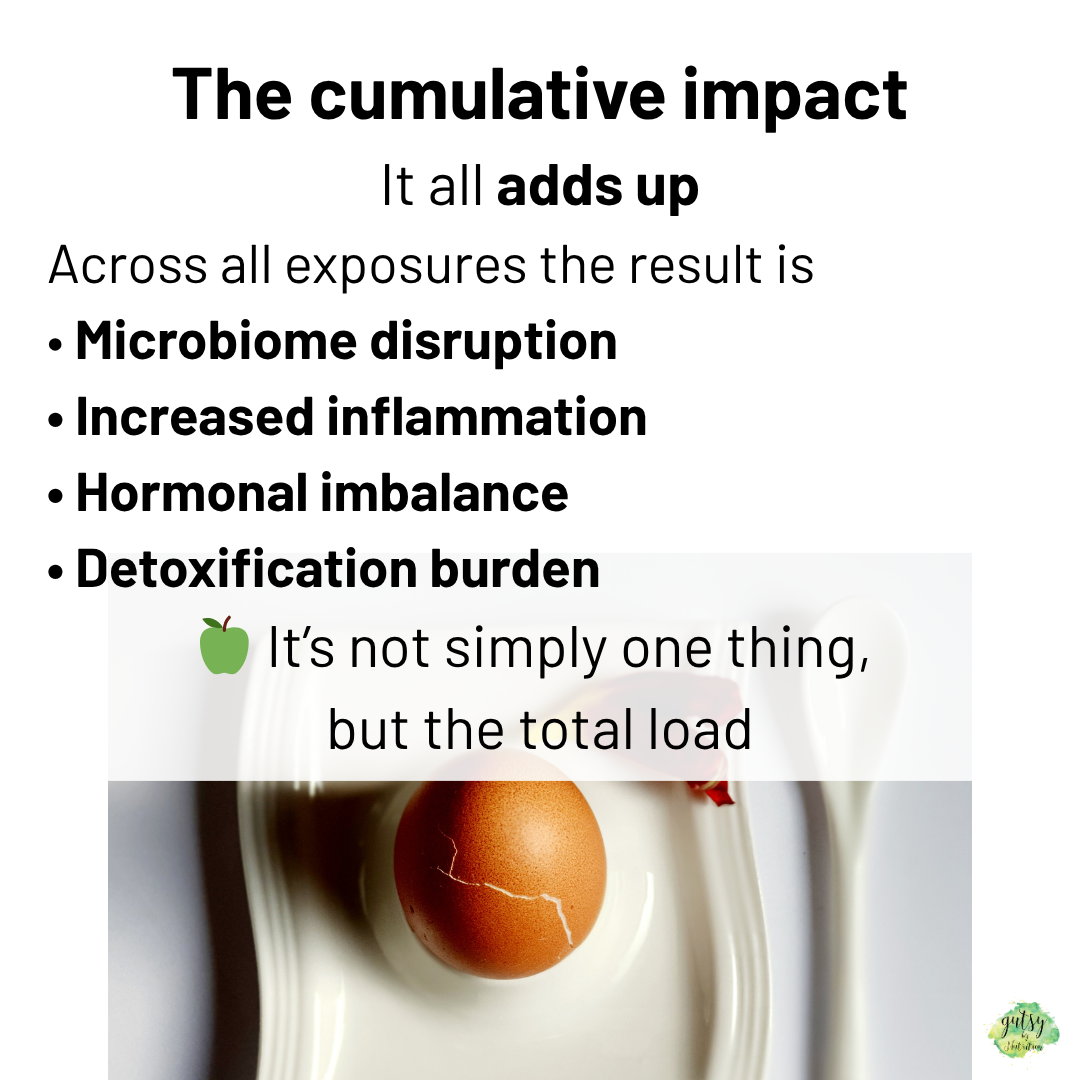
The issue is not simply calories or macronutrients (protein, fat, carbs) anymore. It is the cumulative burden placed on the body by constant exposure to substances the human system did not evolve alongside.
For some people, this may contribute to
inflammation
gut irritation
blood sugar dysregulation
fatigue
food sensitivities
hormonal disruption
immune dysregulation
changes to the microbiome
And often, these effects are subtle at first — building over years rather than days.
Even ‘Healthy’ Food Has Changed
One of the biggest misconceptions is that problems only exist in junk food.
But even fresh produce has changed significantly.
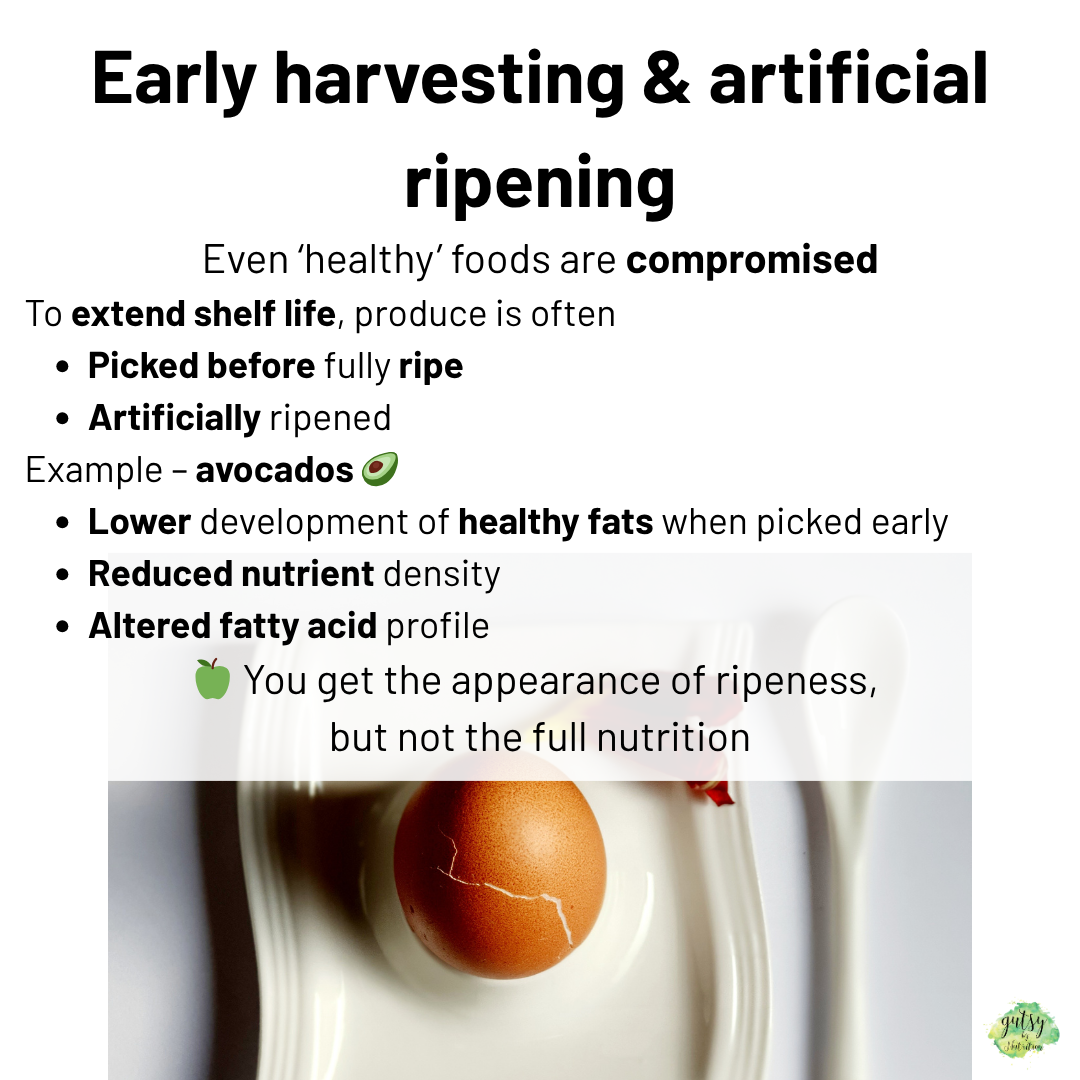
Many fruits and vegetables are harvested early so they can survive long transport times and supermarket storage. This often means they are picked before fully ripening naturally on the plant — the stage where many nutrients, antioxidants, and beneficial compounds would normally continue developing.
Some foods are then artificially ripened using gases or chemical processes before reaching store shelves.
In some cases, modern farming practices prioritise
appearance
transport durability
shelf life
yield
over nutrient density.
This doesn’t mean fruits and vegetables are ‘bad.’ Far from it. Whole foods are still foundational to health.
But it does mean that not all produce is equal anymore.
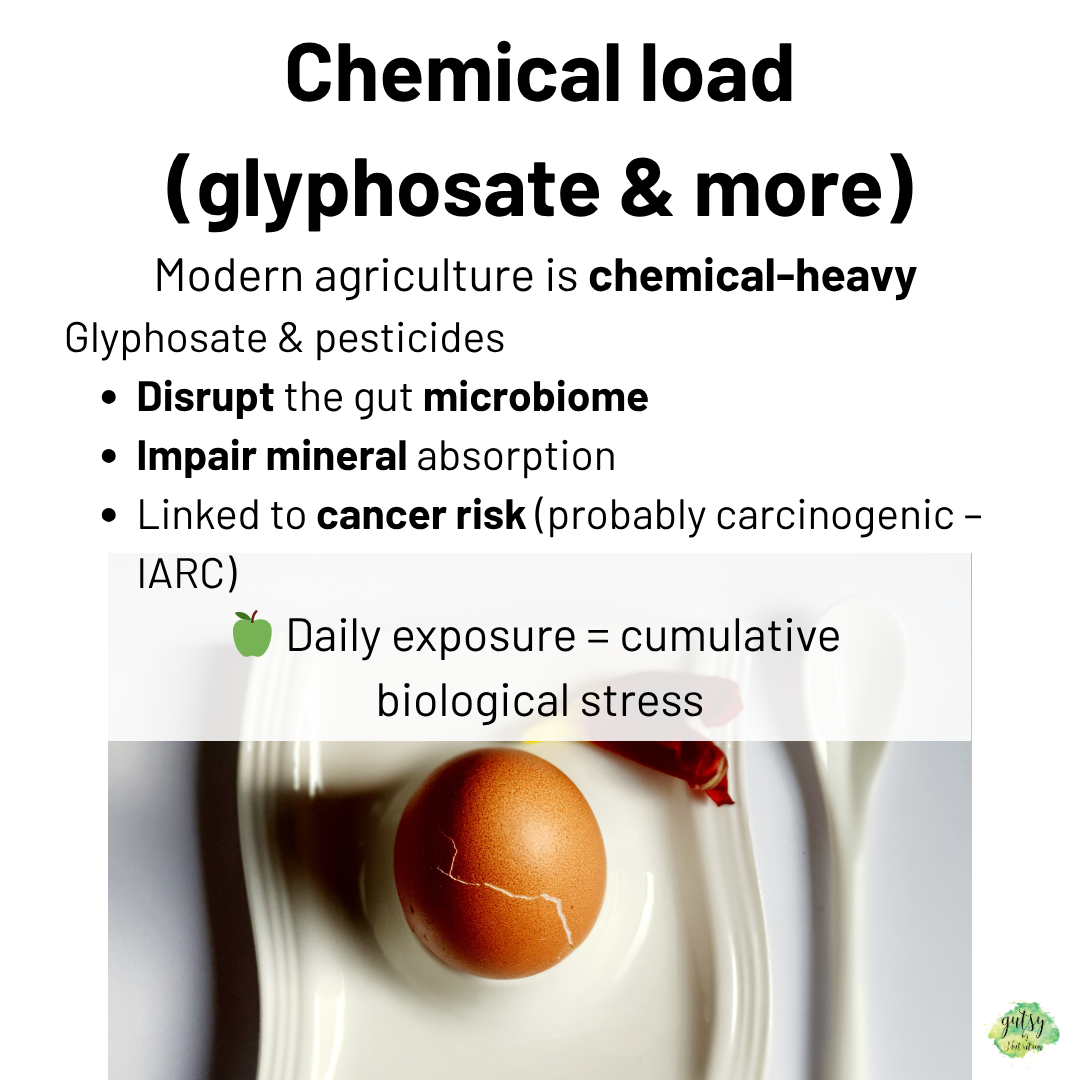
Pesticides, Herbicides & Chemical Exposure
Chemical agriculture has also become a major part of modern food production.
Many crops are exposed to
pesticides
herbicides
fungicides
fertilisers
post-harvest chemical treatments
One of the most discussed examples is glyphosate, widely used in conventional farming.
While debates continue around long-term safety, growing concerns exist around the cumulative effects of chronic low-dose exposure — particularly regarding
gut microbiome disruption
detoxification burden
inflammation
endocrine (hormonal) disruption
For sensitive individuals, or those already dealing with chronic health issues, these exposures may add to an already overloaded system.
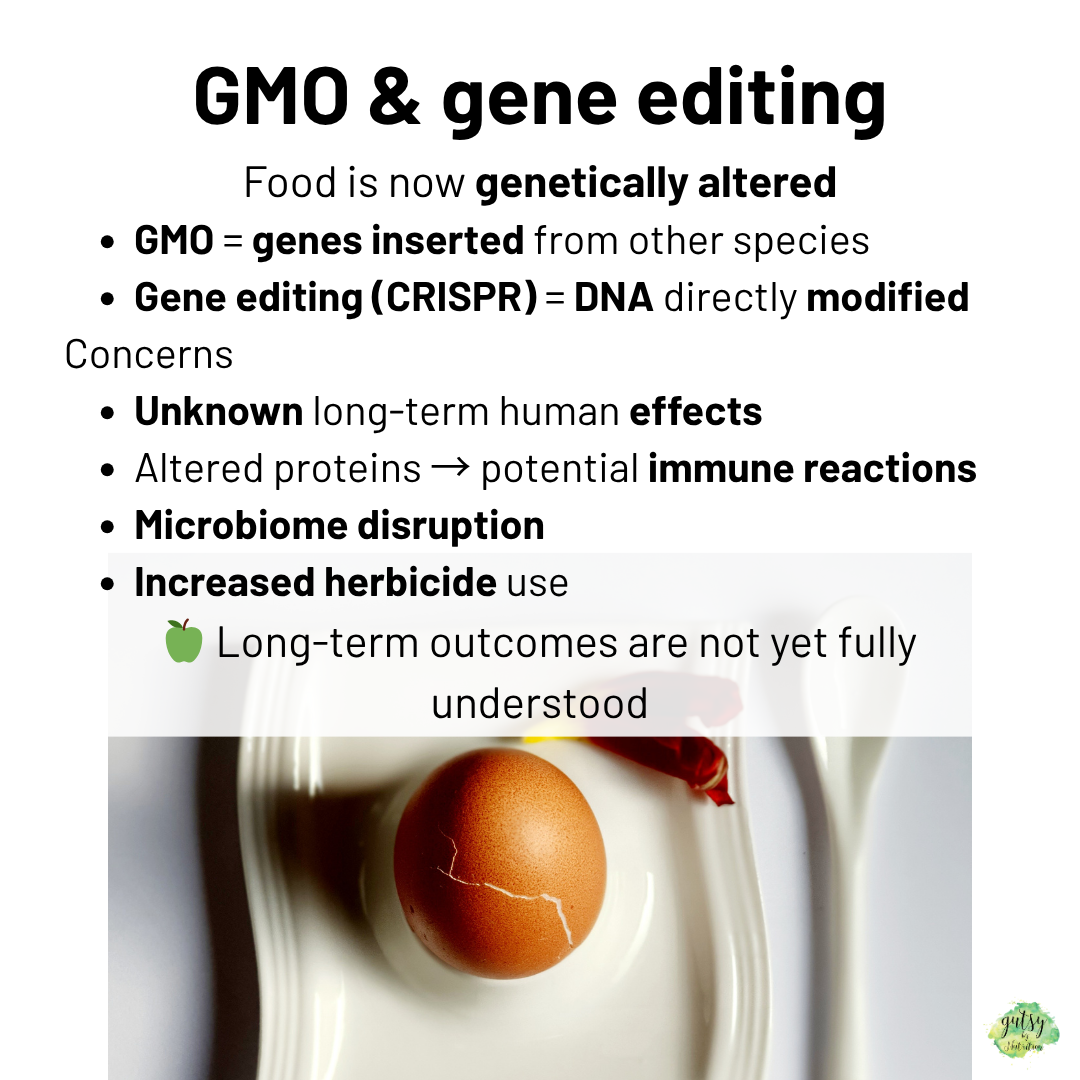
Genetic Modification & Gene Editing
Another evolving area is genetic modification and newer gene-editing technologies.
Supporters argue these technologies improve crop resistance, food supply stability, and farming efficiency. Critics raise concerns about
long-term ecological impacts
chemical dependence in agriculture
unintended biological changes
lack of long-term human data
The reality is that food technology is advancing faster than many consumers realise.
Most people simply want transparency — to understand what they are eating and make informed choices for themselves and their families.
Why Some People React More Than Others
Not everyone responds to modern food changes in the same way.
Some people appear resilient, while others develop
bloating
fatigue
migraines
skin issues
IBS symptoms
histamine reactions
brain fog
autoimmune flares
unexplained inflammation
Why? Because health is cumulative.
The body’s ability to tolerate modern exposures is influenced by
gut health
nervous system regulation
detoxification capacity
nutrient status
stress load
genetics
mineral balance
sleep quality
previous infections or toxic burden
At some point, many people reach a threshold where the body can no longer compensate the way it once did.
Awareness, Not Perfection
This conversation is not about becoming obsessive or fearful around food.
Perfection is impossible.
It is about becoming more conscious and empowered in a food environment that has become increasingly artificial and complex.
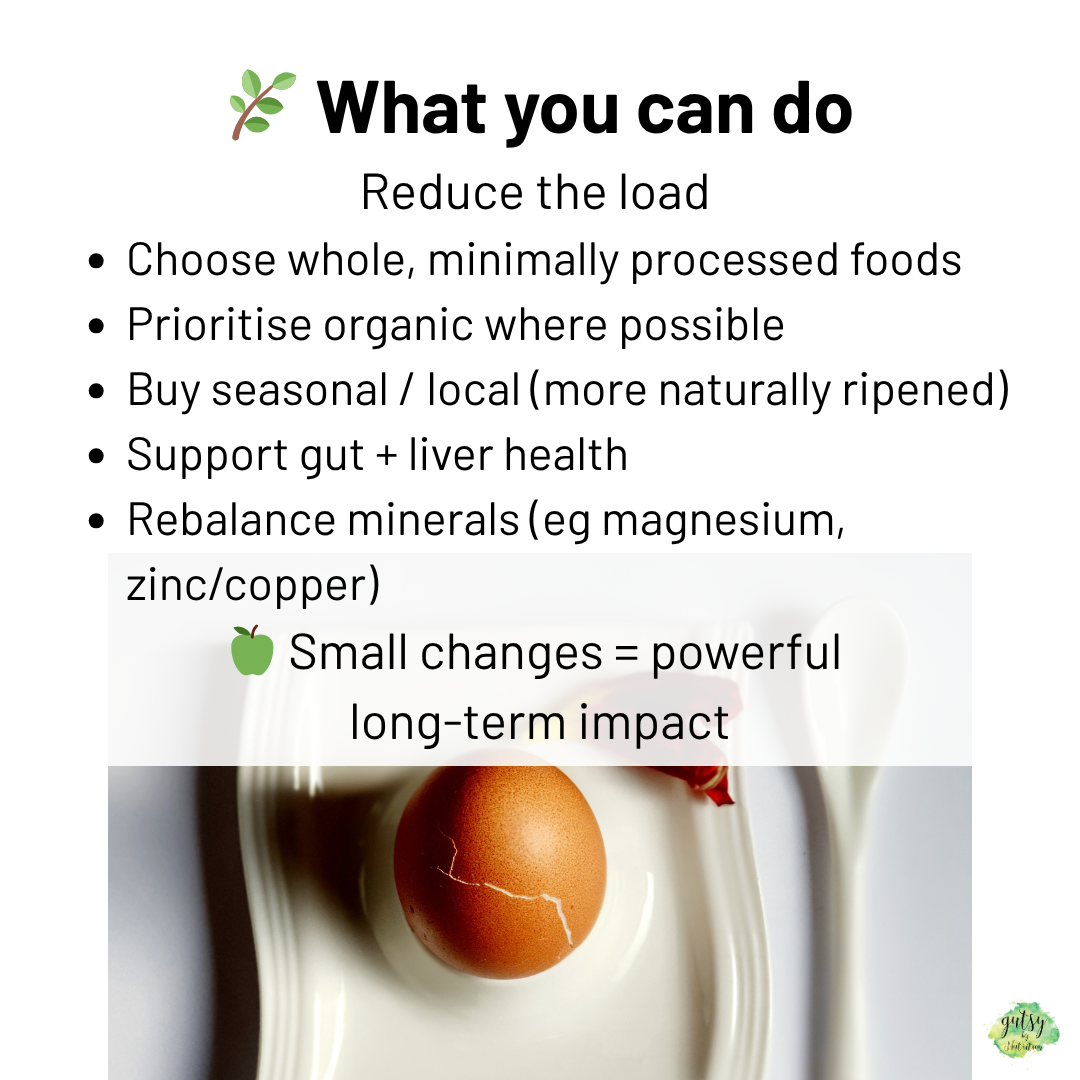
Small changes matter
choosing less processed foods where possible
supporting local or seasonal produce
washing produce well
prioritising nutrient density
reading ingredient labels
reducing unnecessary chemical exposure
supporting gut and metabolic health
Every informed decision helps reduce overall burden on the body.
The Bigger Picture
Food is information for the body.
It influences
hormones
immunity
inflammation
energy
brain function
mood
metabolism
gut health
And when food itself changes, human health changes alongside it.
Awareness is not fear. It is empowerment.
Because the more we understand about what is happening within our food system, the more intentional we can become about nourishing our bodies in a world where “food” is not always what we think it is anymore.