
Is candida a yeast or fungus? The difference is key
Bloating that won't shift. A "coated" tongue. Sugar cravings that hit no matter how well-planned the day was. Recurring thrush or skin flare-ups. Brain fog after carbs.
These are the entry points — the ones that eventually lead to hearing the word candida for the first time, often after months of being told everything is "within normal range."
What is candida?
Candida lives in most bodies already — on the skin, in the gut, in the mouth. In a balanced system, it sits quietly as part of the microbial community, alongside bacteria that keep it in check.
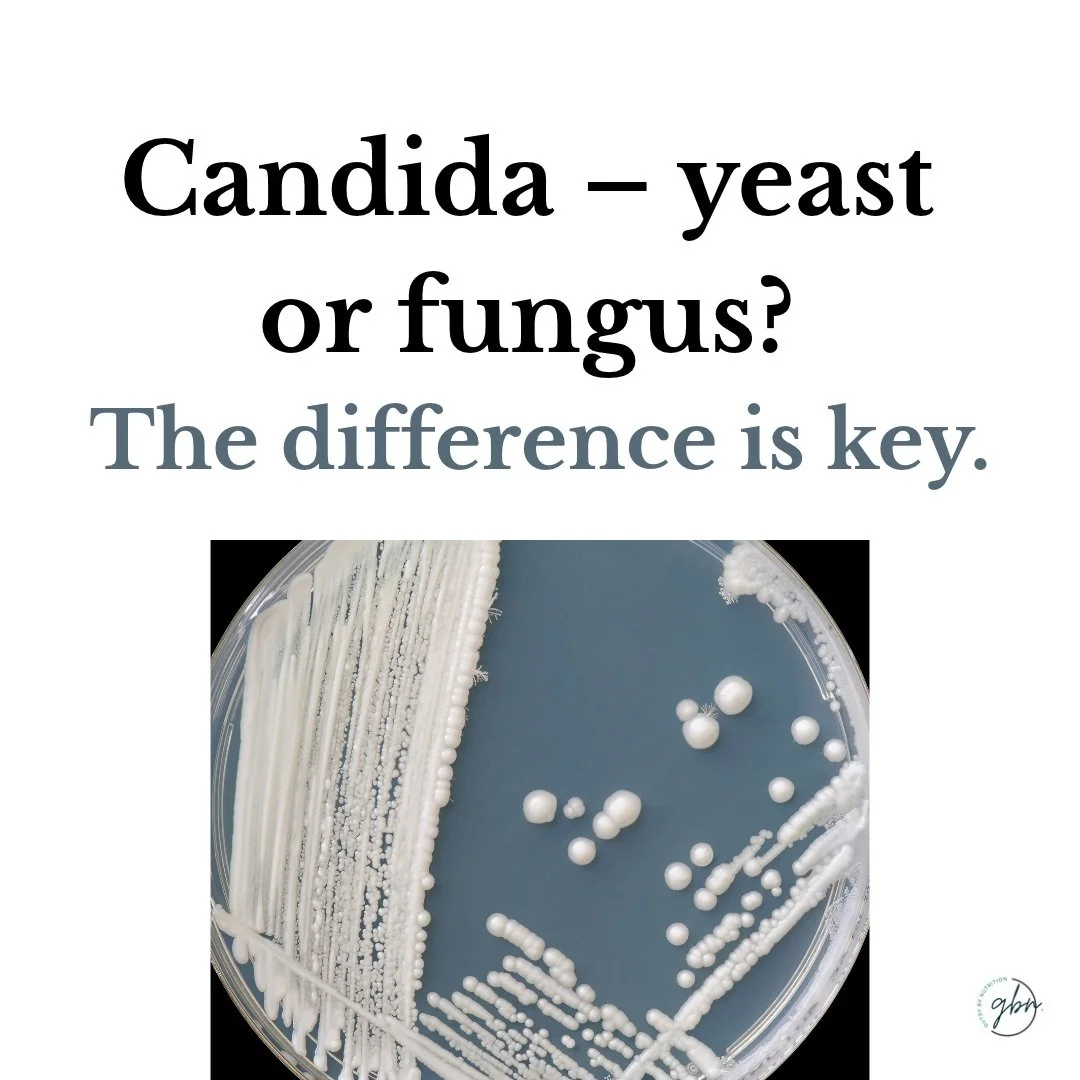
The confusion often starts with language. Candida gets called a "yeast" and a "fungus" as though these are two different things. They're not — yeast is simply one shape candida can take. Fungus is the broader family it belongs to.
Two shapes, one organism
Think of candida as having two settings.
Round and single-celled — this is candida in its quiet, low-key form. Budding, multiplying slowly, coexisting.
Long and branching — this is candida stretched into thread-like structures called hyphae. In this form, it can push into the lining of the gut wall, cling on more stubbornly, and cluster together into a protective layer (a biofilm) that's harder to shift.
Same organism. Different behaviour, depending on the environment around it.
Why this difference is important
The presence of candida isn't the concerning part — most bodies carry some. What matters is which shape is dominant, and why the terrain shifted to favour that transformation in the first place.
Common drivers behind that shift include
A course of antibiotics wiping out the bacterial competition
A diet high in refined sugar feeding it
Chronic stress altering gut pH and motility
Oestrogen fluctuations
A compromised gut lining that gives it more room to establish itself
This is why testing for "candida present" alone tells an incomplete story.
Two people can have the same stool result and very different experiences — one because it's sitting quietly in yeast form, the other because it's shifted into an invasive, hyphal state.
Should the goal be getting rid of candida entirely?
This is where an important distinction sits.
Candida isn't an intruder to eliminate completely; it's a normal resident that's overgrown or changed shape because the surrounding environment let it. Total eradication isn't realistic and isn't the aim. Restoring balance is.
What helps shift it back to its quiet form
Rather than a single fix, this comes down to changing the conditions that favoured the transformation in the first place:
Starve the overgrowth, gently — reducing refined sugar and alcohol removes candida's preferred fuel source, without needing extreme restriction that stresses the body further.
Rebuild the competition — supporting beneficial bacteria (through diet diversity and, where appropriate, targeted probiotics) means candida has less room to dominate.
Repair the terrain — a stressed, permeable gut lining gives candida more surface to cling to. Supporting gut lining integrity is often central to lasting change.
Address what let it in — a recent antibiotic course, chronic stress, or hormonal shifts are common background factors worth identifying rather than skipping past.
Break up the biofilm, when relevant — in more established cases, specific biofilm-disrupting approaches can help make the overgrowth more accessible to address, though this step is not always needed and depends on the individual picture.
This is where functional testing becomes useful — not to chase a single number, but to understand the wider pattern: gut terrain, immune markers, and what's been feeding the imbalance, so the approach fits the person rather than a generic protocol.
You can book a FREE 20-minute call HERE — tell me your story